
Case Study: B&I Feasibility Optimization (USDA Lending)

Executive Summary
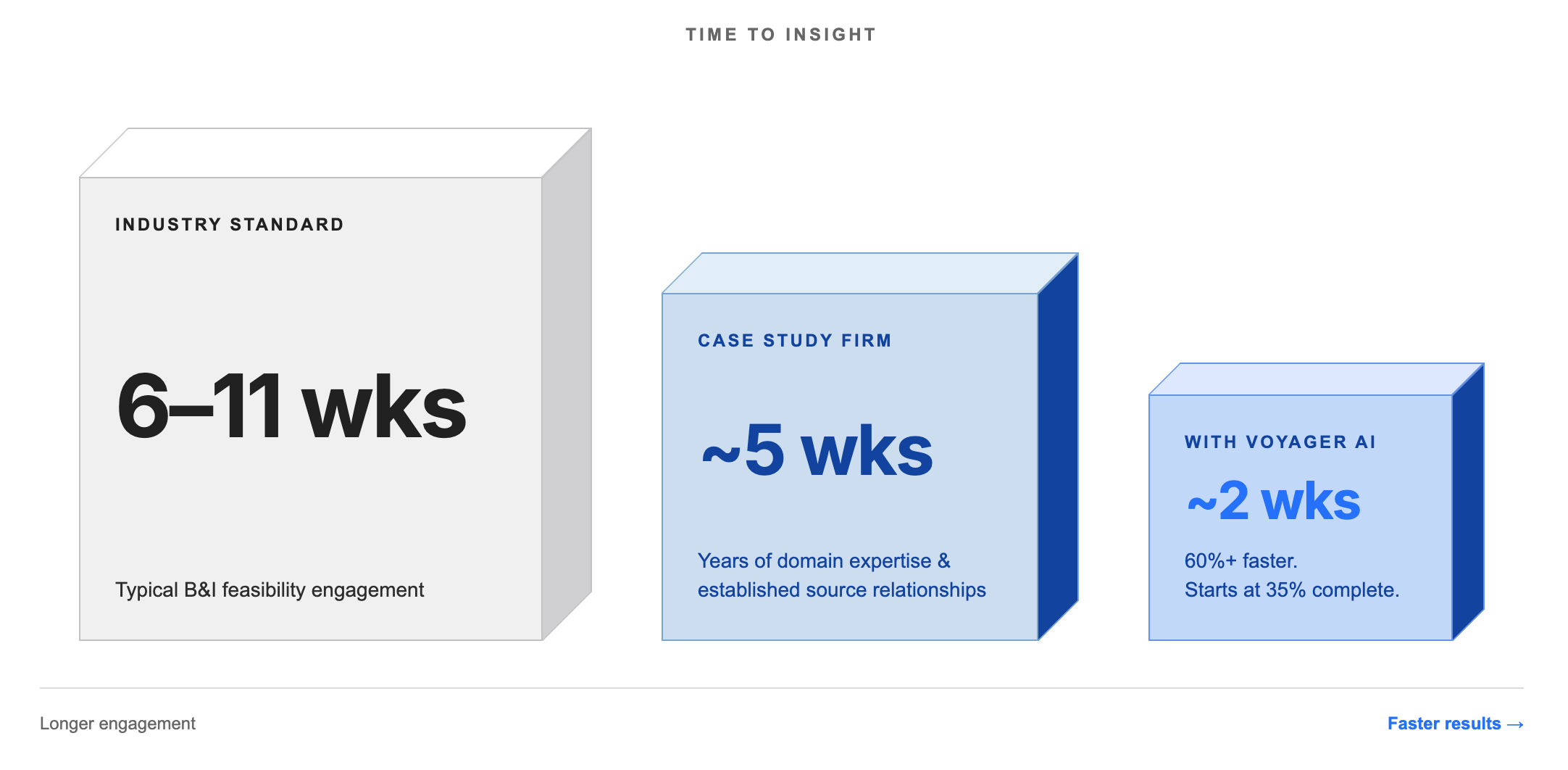
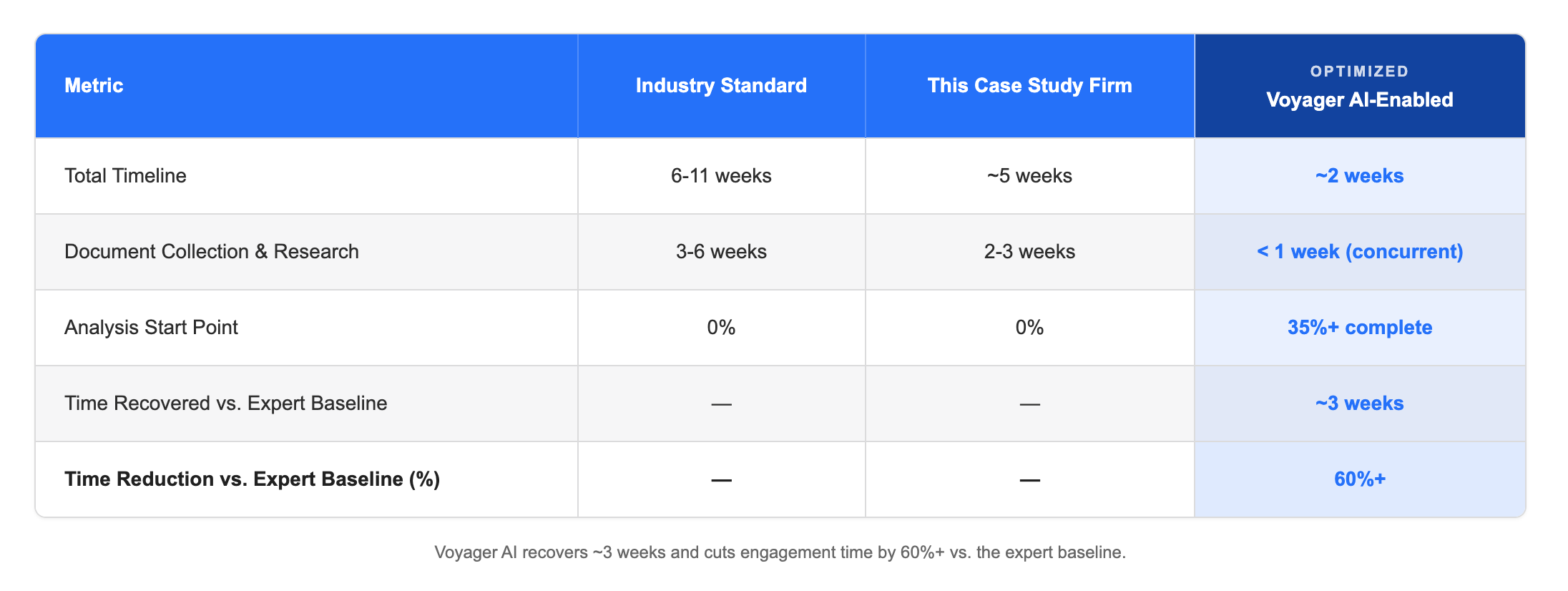
This case study details how a boutique USDA consulting firm improved its B&I feasibility process using Voyager AI. By restructuring the sequence of project phases and using automated workflows, the team reduced project timelines by more than 60 percent. This shortened a process that an experienced team had already optimized to approximately 5 weeks, which is well below the 6 to 11 week industry standard. The analysis phase now begins at over 35 percent completion, improving productivity from the start of the project.
Industry Context: Where This Firm Started
A USDA B&I feasibility study requires extensive preparation before a lender can advance a guarantee application. This includes market demand analysis, financial projections, debt service capacity, and compliance validation. Industry timelines reflect this complexity.
This firm's 5-week baseline was not a slow process. It was optimized over time based on their refined experience. The gains documented here were achieved on top of a workflow that was already well below industry standard.
1. Analysis of the Legacy Process
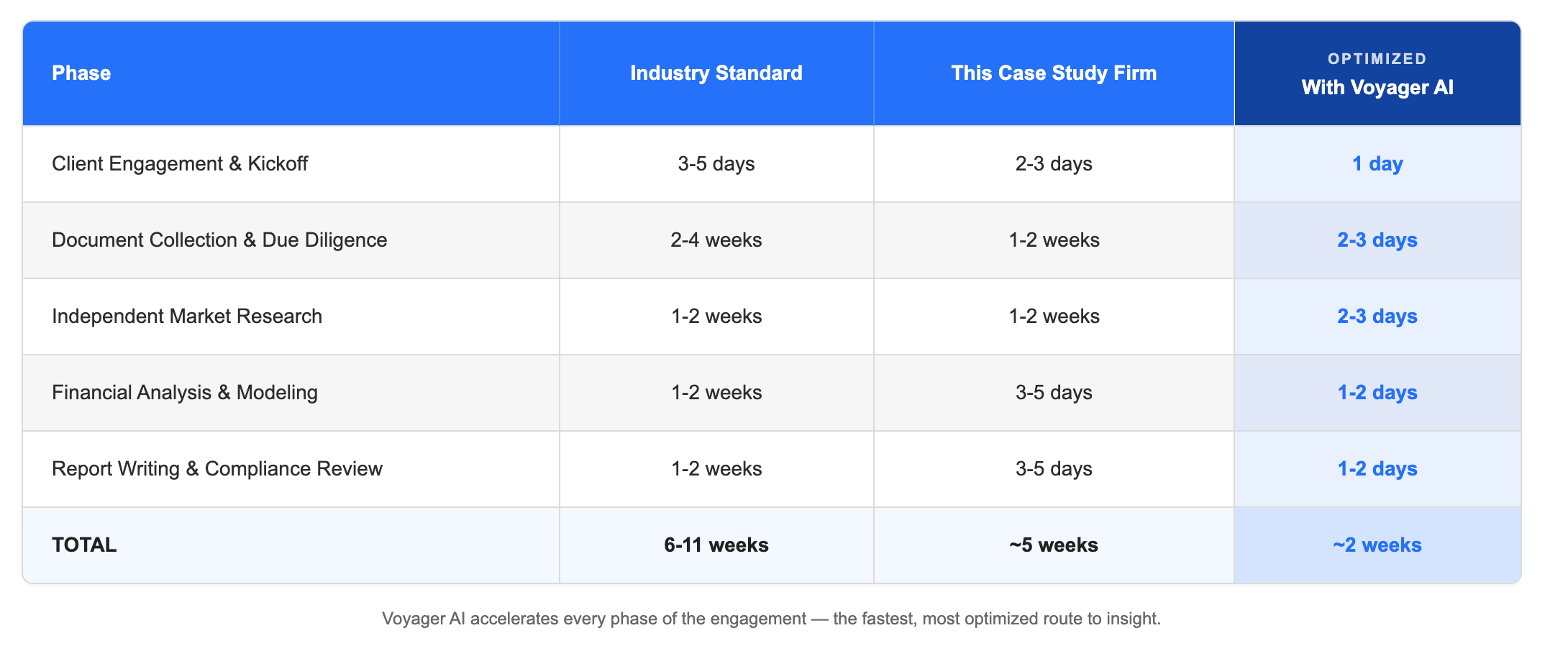
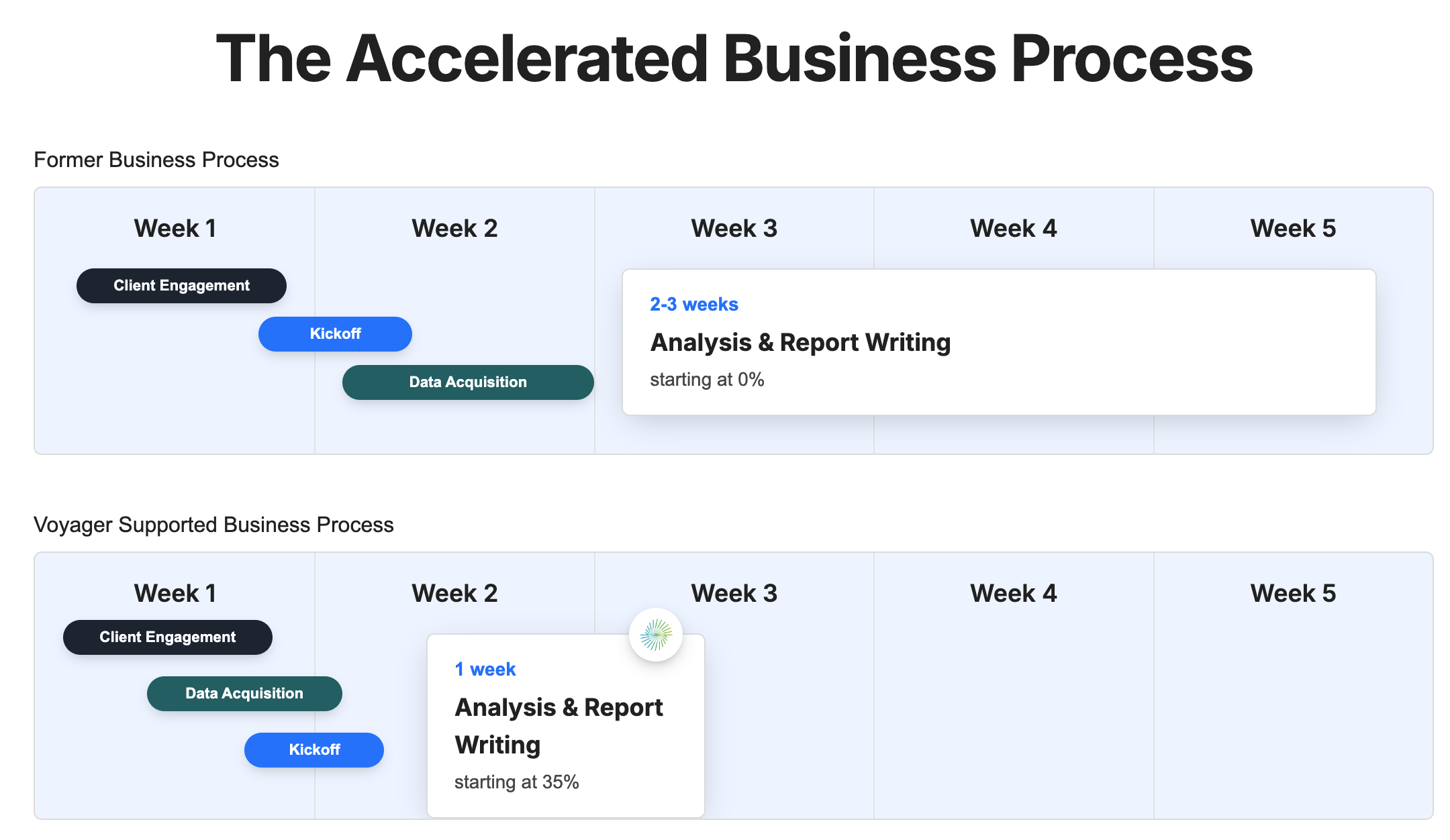
Even at 5 weeks, the process had a structural bottleneck. Document collection and independent market research, the two most coordination-intensive phases, had to be substantially complete before financial modeling could begin. Modeling had to close before meaningful report writing could proceed.
The firm's analysts, however experienced, were spending 2 to 3 weeks per engagement on source outreach, document coordination, and data organization. That is work requiring institutional knowledge to execute well, but not analytical judgment to complete. Financial analysis and report writing, by contrast, moved quickly once the inputs were ready. An experienced team works through pro forma modeling and final drafting in a matter of days.
The constraint was never the analysis. It was the preparation.
2. The Voyager AI-Enabled Workflow
Adding Voyager AI changed the project lifecycle. The platform automated document collection and independent market research, and was configured to conduct that work the same way the human team would. It reaches out to the same authoritative sources, pulls from the same data sets, and organizes findings into the same report structure that the analysts rely on.
By completing this work before the project kickoff, the kickoff itself becomes more substantive, and the analysis phase begins with a report already more than 35 percent complete.
- Phase 1 Client Engagement: Initial contact and scope definition. This remains unchanged.
- Phase 2 Automated Document Collection and Market Research (Under 1 week): Voyager AI handles intake, verifies completeness, flags gaps, queries the authoritative third-party sources the team uses, and populates the corresponding report sections concurrently before kickoff.
- Phase 3 Informed Project Kickoff: Stakeholder alignment supported by data already acquired and structured.
- Phase 4 Analysis and Report Writing (1 to 2 weeks): The team receives an initial report already over 35 percent complete, including market context, data compilation, and financial framework drafted and sourced. The team then applies its expertise to evaluation, validation, and recommendation.
The system was designed to keep the human team in the lead at every stage. Voyager AI does not make decisions or finalize findings. It prepares information to the standard that the expert team established, so analysts spend their time on work that cannot be automated.
3. Quantitative Performance Comparison
4. Impact
The numbers above reflect more than efficiency gains. They reflect a fundamental shift in how the firm's analysts spend their time.
This firm's 5-week process was the product of years of experience from analysts who knew which sources to pull, how to structure a credible study, and where data quality issues typically arose. That knowledge is highly valuable. Voyager AI encoded that workflow into the platform, allowing the preparation work to run at the firm's standard without consuming their hours.
The result is a more efficient process that frees up 3 weeks per engagement for the qualitative analysis and client consultation that define the quality of the final recommendation.
Analysts moved from assembling information to evaluating it, focusing on judgment and validation rather than coordination and preparation. The team delivered faster results and recommendations rooted in a comprehensive understanding of each client's needs.
Stop spending weeks on preparation and coordination.
See how Voyager AI can automate your document collection and market research so your team can focus on what they do best: expert analysis.
About Voyager AI
Voyager AI is the Top AI Vertical Financial Workflows Platform 2026, recognized by Financial Services Review Magazine. Built on a deterministic decision engine that ensures every step is structured, recorded, and traceable, the platform integrates compliance directly into workflow execution — not as a post-process check, but as part of how the work is done. No technical expertise is required; analysts and operational teams manage workflows through a business-oriented interface without reliance on engineering resources.
 The Manufacturing Outlook